2.1 How Should the Assistant Sound in Each Language?
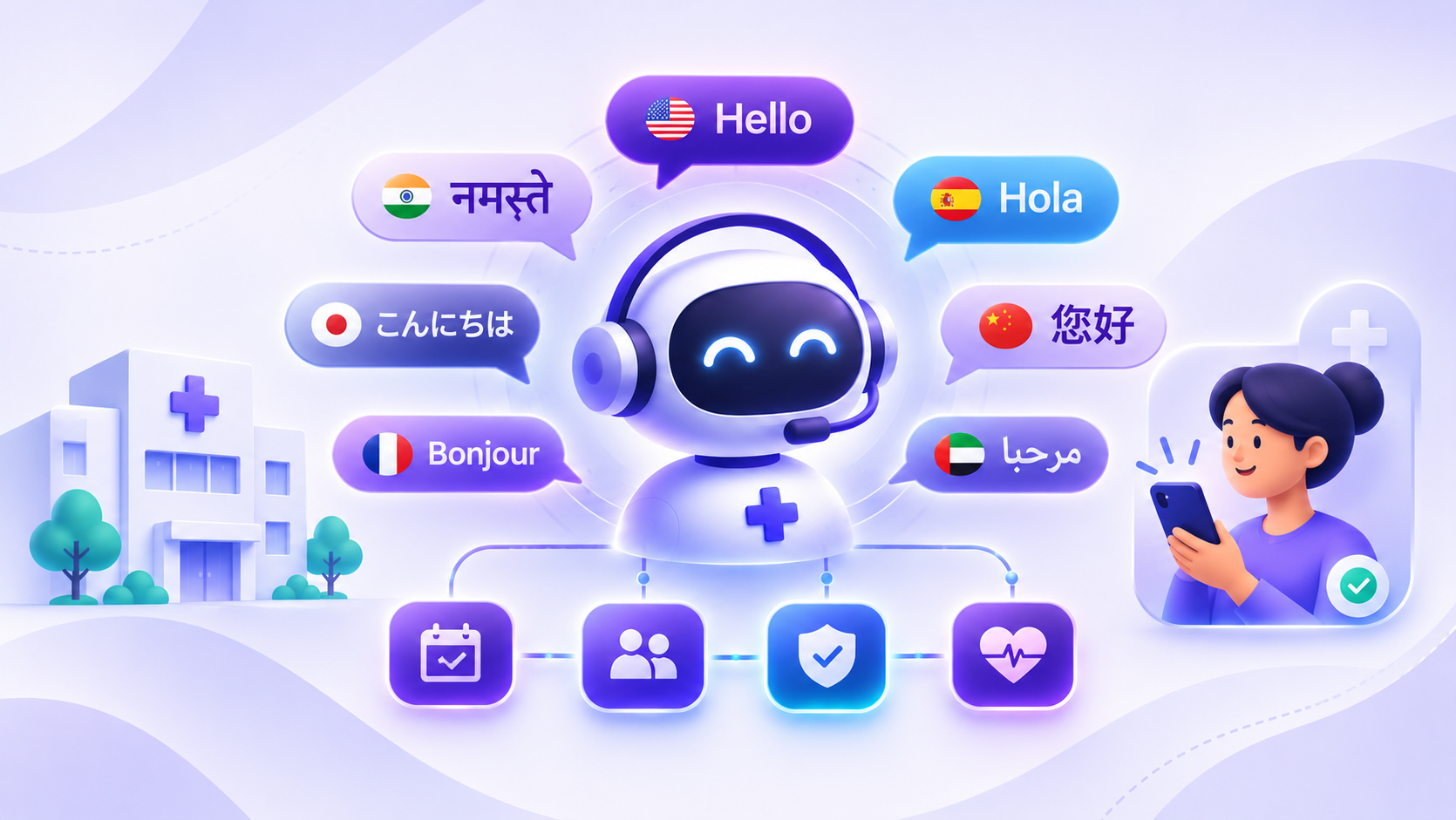
It should sound like your best front-desk person in that language, not like a translated script. That means the respectful form of address, the everyday word in place of the textbook one, and comfort with mixed speech. Write each language natively, then have a native speaker from your patient community review it.
2.2 Formality and Everyday Words
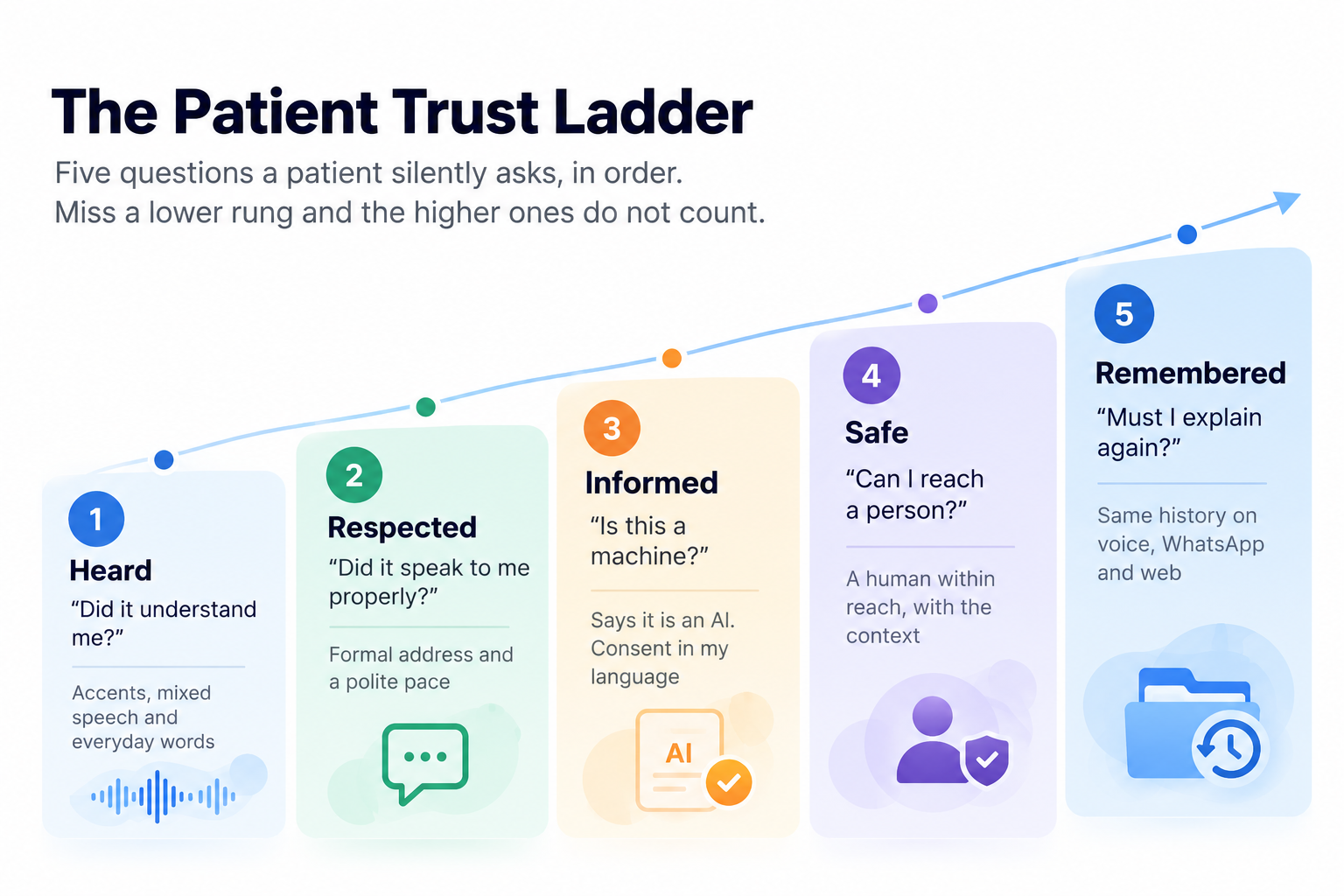
Formality comes first. Hindi separates aap from tum, Spanish separates usted from tú, and Tamil separates neenga from nee. A 60-year-old patient addressed with the casual form hears disrespect, however accurate the rest is. Default to the formal form.
Vocabulary comes next. In much of India, patients say "sugar" for diabetes and "BP" for high blood pressure. Mixed speech is normal too. "Kal ka appointment reschedule karna hai" is one request in two languages, and the assistant should treat it as ordinary.
2.3 Matching the Tone to the Channel
The channel changes the tone as well. A voice bot needs short sentences and should read back names, dates, and times. A WhatsApp message can carry buttons, and many patients type Hindi or Tamil in Roman letters. If voice is your first channel, our guide to real-time voice AI agent architecture covers the timing side.
2.4 When Should the Assistant Hand Over to a Human?
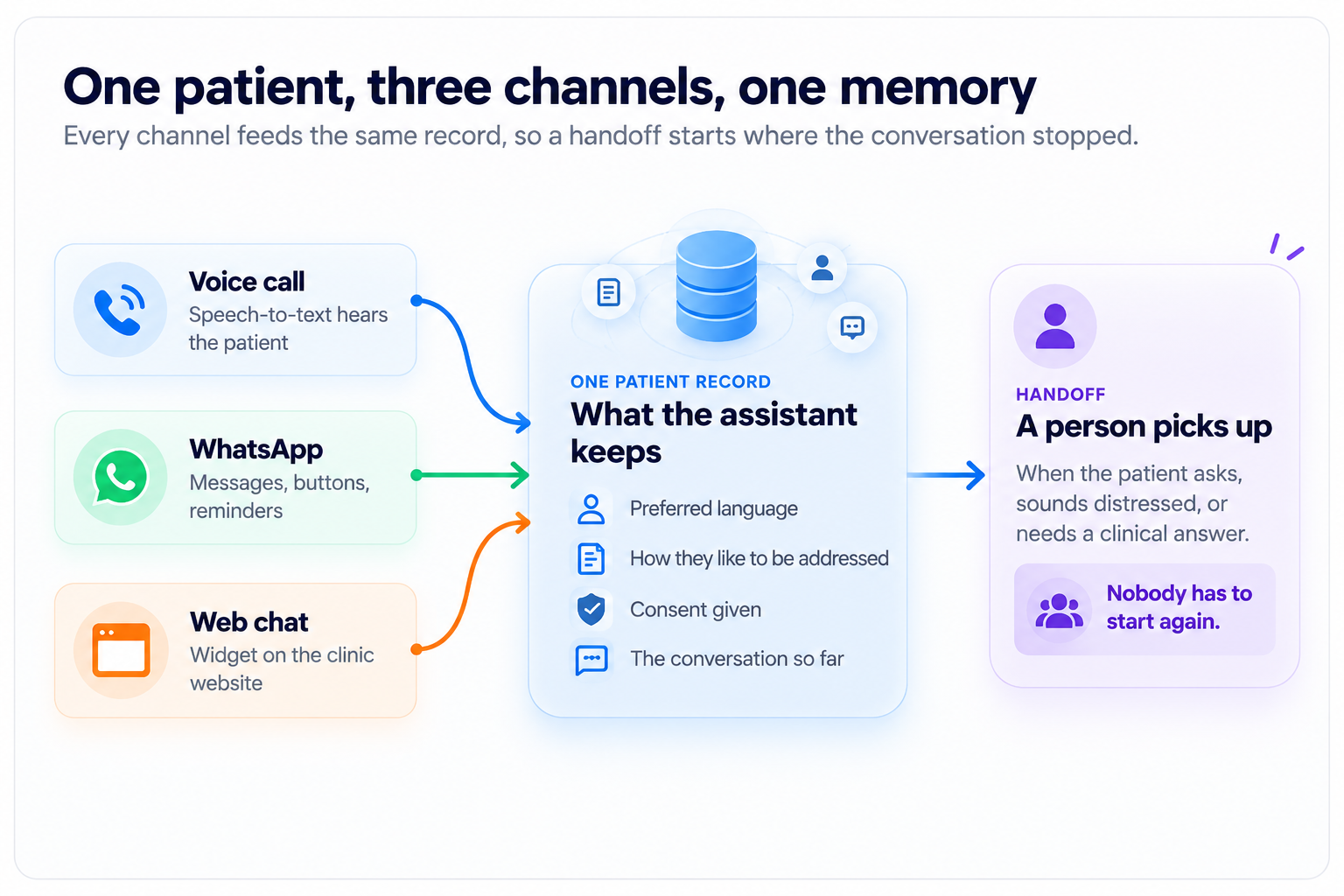
Hand over whenever the patient asks, sounds distressed, describes an urgent symptom, or needs a clinical answer. The assistant handles patient intake, booking, and routine questions. A person handles judgment. The handoff must carry the conversation so far, in the patient's language, so nobody has to start again.
Keep the scope narrow. Clinical guardrails should stop the assistant from diagnosing or advising on doses. In a clinical moment, its job is to escalate to a clinician with context.
2.5 One Memory Across Every Channel
Memory makes the handoff work. A patient may start on your web chat widget, continue on WhatsApp through the WhatsApp Business API, and finish on a phone call. One record should hold their language, consent and history across all three. That is what omnichannel means in practice.